Hillsfar – The Strange and Ambitious Forgotten RPG Experiment on the NES
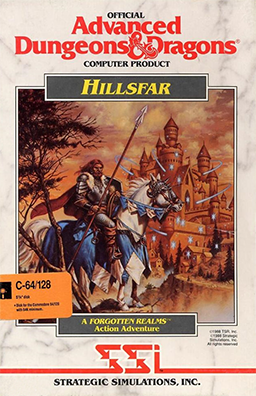 During the late 1980s and early 1990s, role-playing games were still evolving on home consoles. Most fantasy RPGs followed familiar formulas involving turn-based combat, dungeon exploration, and long text-heavy adventures. Then there was Hillsfar — a game that tried to do almost everything at once.
Released in 1989 and based on the Advanced Dungeons & Dragons Forgotten Realms universe, Hillsfar was one of the strangest RPG hybrids ever released on the Nintendo Entertainment System. Instead of focusing entirely on traditional role-playing mechanics, the game mixed horseback riding, arena combat, lockpicking, archery, exploration, and fantasy storytelling into a single experience.
The result was a bizarre, ambitious, and deeply memorable title that never became a massive hit but developed a cult following among retro RPG fans.
For many players, Hillsfar felt unlike anything else available on the NES. It was not simply another Dragon Warrior clone. It was an experiment — one that occasionally stumbled, but one that also delivered moments of creativity few other console RPGs even attempted during the era.
A Forgotten Realms Adventure
Hillsfar took place within the famous Forgotten Realms campaign setting of Dungeons & Dragons, one of the most beloved fantasy universes in tabletop gaming history. Long before Baldur’s Gate or Neverwinter Nights became household names among RPG fans, Hillsfar was introducing NES players to dangerous cities, fantasy intrigue, and dangerous quests inside the Forgotten Realms world.
The game centered around the city of Hillsfar, a dangerous and politically unstable place where elves had been outlawed and corruption lurked throughout the streets. Players created a hero and traveled through surrounding regions while uncovering conspiracies, battling monsters, and trying to survive numerous dangerous situations.
Unlike many fantasy games of the era that focused entirely on saving the world, Hillsfar felt smaller and more personal. Much of the game involved navigating city politics, surviving criminal encounters, and dealing with life inside a harsh fantasy society.
That grounded atmosphere gave the game a unique tone compared to more heroic high-fantasy adventures.
Character Creation Added Depth
One feature that immediately helped Hillsfar stand out was its character creation system.
Instead of forcing players into a predefined hero, the game allowed them to choose different fantasy races and classes. Fighters, clerics, thieves, mages, and other classic Dungeons & Dragons archetypes were available.
For NES gamers during the late 1980s, this level of customization felt impressive. Many console RPGs at the time offered little flexibility beyond naming the main character. Hillsfar instead attempted to recreate some of the freedom associated with tabletop role-playing.
Different character types also changed how the game played. Thieves excelled at lockpicking mini-games, while fighters handled combat situations more effectively. Magic users gained access to spells that altered exploration and encounters.
This added replay value because players could experience the adventure differently depending on their chosen class.
The Mini-Games Made Hillsfar Unique
What truly separated Hillsfar from nearly every other NES RPG was its bizarre collection of mini-games and action sequences.
Traveling between cities involved horseback riding sequences where players dodged obstacles and enemies while racing down roads. Combat sometimes shifted into side-view arena battles. Thieves could participate in lockpicking challenges requiring timing and precision. Archery contests tested aim and reflexes.
At times, Hillsfar felt less like a traditional RPG and more like several completely different games stitched together into one fantasy package.
Some players loved this variety because it kept the gameplay unpredictable. Others found the constant genre shifts frustrating and awkward.
The horseback riding sections especially became infamous. Players had to avoid rocks, trees, enemies, and other hazards while managing movement at high speeds. These sequences were surprisingly difficult and often interrupted the slower RPG pacing unexpectedly.
Still, there was something undeniably ambitious about the design. Hillsfar refused to remain confined within one gameplay formula.
The City of Hillsfar Felt Dangerous
One of the strongest aspects of the game was its atmosphere.
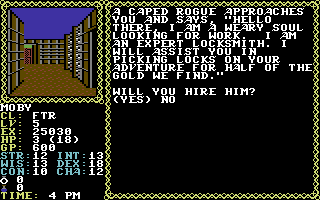 Unlike many bright and cheerful fantasy RPGs, Hillsfar often felt tense and oppressive. The city itself carried a constant sense of danger. Guards patrolled aggressively, prejudice against non-humans created political unrest, and criminals lurked throughout the streets.
The game’s writing attempted to create a believable fantasy world where survival mattered. Players could not simply wander carelessly without consequences.
This darker atmosphere gave Hillsfar a mature feeling that separated it from more simplistic fantasy adventures on the NES.
Even though the hardware limitations prevented detailed storytelling, the game still managed to create a convincing sense of place. Hillsfar felt like a real city struggling with corruption, fear, and political instability.
The Graphics Were Surprisingly Detailed
Visually, Hillsfar pushed the NES hardware harder than many RPGs of its time.
Character portraits contained impressive detail for an 8-bit system. Different gameplay modes also featured distinct visual styles. The horseback riding sequences used pseudo-3D perspectives, while combat areas shifted into side-view action scenes.
The game constantly experimented with presentation.
Town environments featured detailed buildings and NPCs, while wilderness areas created the feeling of dangerous travel across hostile territory.
Enemy sprites were varied and often looked intimidating. Fantasy creatures such as trolls, skeletons, and monsters helped reinforce the game’s darker tone.
Although modern gamers may view the visuals as primitive, Hillsfar looked remarkably ambitious compared to many RPGs available during its release window.
The Difficulty Could Become Frustrating
Like many experimental NES games, Hillsfar suffered from uneven difficulty.
Some gameplay mechanics worked better than others. The horseback riding sections could become brutally punishing, especially for players unfamiliar with the controls. Certain mini-games required precision that felt awkward using the NES controller.
Combat also lacked the smoothness of more refined RPGs. Battles occasionally felt clunky, and some encounters seemed unfairly difficult.
Yet despite these frustrations, players often kept pushing forward because the game remained fascinating. There was always another strange mechanic, quest, or gameplay twist waiting around the corner.
Hillsfar may not have been perfectly polished, but it rarely became boring.
The Music Enhanced the Fantasy Atmosphere
The soundtrack helped strengthen the game’s fantasy setting considerably.
Rather than using upbeat arcade melodies, Hillsfar leaned into more dramatic and adventurous compositions. Town themes carried mysterious undertones, while exploration music created feelings of tension and uncertainty.
The NES sound hardware had obvious limitations, but the music still succeeded in making the world feel larger and more immersive.
Combined with the darker storytelling and unusual gameplay variety, the soundtrack helped Hillsfar feel surprisingly mature compared to many other console RPGs of the era.
A Game Ahead of Its Time
Looking back today, Hillsfar feels strangely ahead of its time in certain ways.
Modern RPGs frequently combine multiple gameplay systems, mini-games, open-world exploration, and action mechanics into enormous hybrid experiences. Hillsfar attempted something similar decades earlier on extremely limited hardware.
The game’s willingness to experiment deserves credit even when certain ideas failed.
It also represented an important step in bringing Dungeons & Dragons storytelling and customization to console audiences. While later games would refine these ideas far more successfully, Hillsfar helped lay some early groundwork for future fantasy RPG experimentation.
The game’s mixture of role-playing, action sequences, and interactive systems hinted at the direction many RPGs would eventually evolve toward years later.
Why Hillsfar Was Forgotten
Despite its creativity, Hillsfar never achieved mainstream popularity.
Part of the problem was timing. The RPG genre on consoles was still developing, and many players preferred simpler, more straightforward experiences. Games like Dragon Warrior and Final Fantasy offered clearer gameplay structures and smoother progression systems.
Hillsfar, by contrast, often felt chaotic and confusing.
Its constant gameplay changes also divided audiences. Some players admired the variety, while others simply wanted a consistent RPG experience.
The game also arrived during a period when the NES itself was beginning to age. By the early 1990s, attention was rapidly shifting toward 16-bit consoles and more advanced fantasy adventures.
As a result, Hillsfar slowly faded into obscurity.
The Cult Following Today
Modern retro gamers often rediscover Hillsfar with fascination.
It may not be considered a masterpiece, but it remains one of the most unusual RPG experiments on the NES. Fans appreciate its ambition, atmosphere, and willingness to try ideas that other games avoided.
Collectors especially enjoy the game because it represents such a strange piece of Dungeons & Dragons history. Before massive fantasy RPG franchises dominated gaming, Hillsfar attempted to bring tabletop-style adventure and freedom to consoles in its own awkward but memorable way.
The game also benefits from nostalgia among players who experienced it during childhood. Many remember renting it simply because the box art looked exciting, only to discover one of the weirdest RPGs the NES library had to offer.
A Fascinating Fantasy Relic
Hillsfar is not a perfect game. Its controls can frustrate players, its difficulty spikes feel uneven, and some mechanics work far better than others.
But perfection was never what made Hillsfar memorable.
What made it special was its ambition. Few NES developers attempted such a massive blend of genres, mechanics, and fantasy storytelling. The game constantly experimented, constantly shifted directions, and constantly tried to surprise players.
In many ways, Hillsfar feels like a prototype for future RPG innovation — an early attempt to make fantasy worlds feel interactive and unpredictable rather than confined to turn-based menus and static exploration.
Today, it survives as one of the NES library’s strangest hidden gems: a flawed but fascinating fantasy adventure that dared to be different during an era when most games played it safe.
For retro RPG fans willing to embrace its quirks, Hillsfar remains a journey worth taking decades later.