Adventure Island – The Wild, Frustrating, and Addictive NES Classic That Defined Hudson Soft
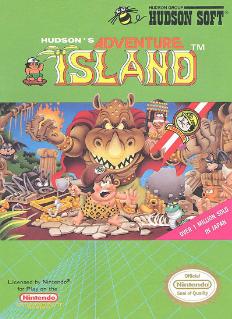 During the golden age of the Nintendo Entertainment System, countless platform games flooded store shelves trying to capture the magic of Super Mario Bros. Some copied Nintendo’s formula directly, while others attempted to create their own identity through unique characters and gameplay mechanics. One of the most memorable examples was Adventure Island — a colorful but brutally difficult platformer that became one of Hudson Soft’s defining franchises.
Released in North America in 1988, Adventure Island starred Master Higgins, a barefoot, grass-skirt-wearing hero who skateboarded, threw stone axes, and battled dinosaurs while trying to rescue his kidnapped girlfriend Tina. On the surface, the game looked cheerful and cartoonish. Underneath, however, was one of the toughest and most demanding action-platformers on the NES.
For an entire generation of gamers, Adventure Island became both a childhood obsession and a source of endless frustration. Players loved its tropical atmosphere, catchy music, and fast-paced gameplay, but they also feared its unforgiving difficulty and relentless level design.
Even today, Adventure Island remains one of the most recognizable and nostalgic games of the 8-bit era.
The Origins of Adventure Island
Interestingly, Adventure Island actually began as something else entirely.
The game was heavily based on an earlier arcade title called Wonder Boy, developed by Escape for Sega. Hudson Soft obtained the rights to adapt the gameplay for the NES but could not use the Wonder Boy character itself. As a result, the company created Master Higgins, who was modeled after real-life Hudson Soft spokesman and famous Japanese gamer Toshiyuki Takahashi.
This unusual history explains why Adventure Island feels somewhat different from other NES platformers of the era. Its gameplay DNA came from arcade game design, meaning the action emphasized speed, reflexes, and survival more than exploration.
That arcade influence would become one of the game’s defining features.
Master Higgins Became an NES Icon
At the center of the game was Master Higgins, one of the strangest heroes of the NES generation.
Unlike armored knights or heroic warriors, Higgins looked like a cartoon caveman on vacation. Barefoot and wearing only a grass skirt and baseball cap, he sprinted across islands filled with monsters, giant insects, and prehistoric creatures.
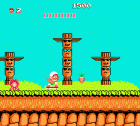 Despite his goofy appearance, Higgins became surprisingly iconic.
Part of his appeal came from how expressive and energetic he felt. He moved quickly, jumped constantly, and attacked enemies with stone axes and boomerangs. Later in the game, players could even ride skateboards, dramatically increasing speed and danger.
The skateboard sections became especially memorable because they transformed the game into near chaos. Higgins moved at incredible speeds while players desperately avoided enemies and bottomless pits.
For many kids during the late 1980s, Adventure Island felt exciting simply because it never slowed down.
The Food Mechanic Changed Everything
One of Adventure Island’s most unique gameplay mechanics was the constantly draining energy meter.
Unlike Mario games where players could stand still indefinitely, Master Higgins continuously lost health over time. The only way to survive was by collecting fruit and food scattered throughout levels.
This mechanic completely changed the pacing of the game.
Players could not carefully wait and study obstacles for long periods because standing around meant death. Instead, the game constantly forced forward movement and quick decision-making.
It created an unusual sense of tension. Even simple jumps became stressful because players always felt pressure to keep moving and keep eating.
For younger players, the mechanic sometimes felt cruel. Missing too much food often resulted in sudden death before reaching the end of a stage.
Yet this same system also made Adventure Island feel incredibly addictive. The constant momentum kept adrenaline high from beginning to end.
The Difficulty Was Legendary
Adventure Island quickly earned a reputation as one of the hardest games on the NES.
At first glance, the bright tropical visuals and cartoon enemies made the game appear friendly and approachable. Then players actually started playing.
The levels were packed with deadly traps, hidden hazards, awkward jumps, and enemies positioned specifically to ruin momentum. Timing became everything.
The game also lacked save systems or passwords in its original NES release. If players lost all their lives, they started over from the very beginning.
That alone made Adventure Island notorious.
Reaching later worlds required memorization, skill, and incredible patience. Many children during the NES era never came close to finishing the game despite countless attempts.
The skateboard sections became especially infamous. While the skateboard increased speed and offered protection from one enemy hit, it also made controlling Higgins dramatically more difficult. Crashing into obstacles at high speed became almost unavoidable during certain sections.
Despite the frustration, players kept coming back because the gameplay itself remained extremely satisfying.
The Level Design Was Creative and Varied
Adventure Island succeeded partly because its environments constantly introduced new ideas.
Players traveled across beaches, forests, caves, mountains, oceans, and icy regions while facing increasingly difficult enemies and hazards.
Some levels focused on precision jumping over collapsing platforms. Others introduced underwater sections, fast enemy waves, or hidden bonus areas.
The game also featured secret eggs hidden throughout levels. Cracking open eggs rewarded players with weapons, skateboards, extra lives, or special items.
These hidden secrets encouraged experimentation and replayability.
The variety helped the game avoid becoming repetitive despite its straightforward premise.
The Music Became Instantly Recognizable
One of Adventure Island’s greatest strengths was its soundtrack.
The music perfectly matched the tropical atmosphere while maintaining the fast-paced energy of the gameplay. Cheerful melodies played constantly as Higgins sprinted through dangerous environments, creating a strange contrast between the upbeat music and the brutal difficulty.
Many retro gamers can still instantly recognize the game’s main theme decades later.
The soundtrack helped Adventure Island stand apart from darker or more serious NES titles. Even when players became frustrated, the music kept the experience feeling fun and adventurous.
Hudson Soft consistently delivered strong music during the NES era, and Adventure Island remains one of the company’s best examples.
The Graphics Captured the Spirit of Adventure
Visually, Adventure Island looked fantastic for an early NES title.
The colorful environments felt lively and energetic. Palm trees swayed, oceans sparkled, and enemies displayed charming cartoon designs.
Master Higgins himself animated smoothly, especially during skateboard sequences where the speed created an exciting sense of momentum rarely seen in early NES platformers.
Enemy variety also impressed players. Snakes, giant snails, bats, frogs, dinosaurs, and strange creatures constantly appeared throughout the adventure.
The bright visuals helped make the game appealing to younger audiences even while the gameplay itself remained punishingly difficult.
The Boss Battles Added Excitement
At the end of many areas, players faced boss encounters requiring careful timing and precision.
These bosses often involved giant creatures or enemy leaders throwing projectiles across the screen while Higgins dodged attacks and countered with axes.
While not extremely complex by modern standards, the boss battles added excitement and helped each world feel like a meaningful accomplishment.
Defeating bosses after surviving difficult stages created a tremendous feeling of relief and satisfaction.
Why Players Loved the Punishment
One of the fascinating things about Adventure Island is how beloved it became despite its brutal difficulty.
Part of the answer lies in the era itself. NES gamers during the late 1980s expected games to be hard. Limited cartridges meant developers often extended game length through challenge and repetition.
Adventure Island embraced that philosophy completely.
But the game also succeeded because failure rarely felt boring. The controls were responsive, movement felt smooth, and the gameplay loop remained exciting even after repeated defeats.
Every run felt like players were improving slightly. Memorizing enemy patterns, discovering hidden eggs, and mastering jumps gradually transformed impossible levels into manageable challenges.
That sense of progression kept players hooked.
The Sequels Expanded the Formula
Adventure Island became successful enough to launch an entire franchise.
Sequels introduced expanded exploration, inventory systems, rideable dinosaurs, and larger worlds. Games like Adventure Island II and Adventure Island III refined the original formula significantly while maintaining the tropical atmosphere and challenging gameplay.
Many fans actually consider the later entries superior because they balanced the difficulty more fairly and added greater depth.
Still, the original game remains the purest expression of the series’ arcade-style roots.
The Game’s Legacy Today
Today, Adventure Island remains one of the defining platformers of the NES generation.
Retro gamers continue revisiting it for both nostalgia and challenge. Speedrunners especially enjoy mastering the game’s fast movement mechanics and dangerous level design.
Master Higgins himself remains one of Hudson Soft’s most recognizable mascots, even if he never reached the worldwide fame of Mario or Sonic.
The game also represents an important era in platform gaming history — a time when developers experimented with arcade pacing, unforgiving difficulty, and unique gameplay mechanics before the genre became more standardized.
Modern players discovering Adventure Island for the first time are often shocked by how demanding it is compared to modern platformers. Yet many also become addicted to its fast pacing and satisfying controls.
A Tropical NES Masterpiece
Adventure Island may appear simple on the surface, but beneath its cheerful visuals lies one of the most memorable and influential action-platformers of the 8-bit era.
Its combination of relentless pacing, creative level design, catchy music, and brutal difficulty created an experience unlike almost anything else on the NES. It frustrated players endlessly, yet somehow kept them coming back for more.
For many gamers who grew up during the late 1980s and early 1990s, Adventure Island became a defining childhood challenge — one of those games that tested patience, reflexes, and determination in equal measure.
Decades later, Master Higgins is still sprinting across beaches, throwing axes at dinosaurs, and desperately searching for fruit while retro gamers smile, cringe, and remember just how unforgiving the NES era could truly be.