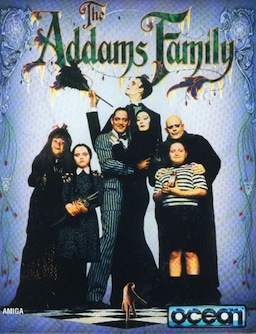
 When people talk about classic 1990s platform games, titles like Super Mario World, Sonic the Hedgehog, and Donkey Kong Country usually dominate the conversation. Hidden beneath those giants, however, was a darkly funny and surprisingly difficult game that captured the spirit of one of pop culture’s strangest families better than almost anyone expected. That game was The Addams Family.
Released in 1992 and based on the wildly successful 1991 movie starring Raul Julia and Anjelica Huston, the game became an instant favorite among kids who loved spooky imagery, gigantic mansions, and brutally challenging gameplay. Developed by Ocean Software, the game appeared on multiple systems including the SNES, Sega Genesis, NES, Game Boy, and several home computers.
At first glance, the game looked like another movie cash-in platformer. During the early 1990s, movie-based games were notorious for being rushed, uninspired, and nearly impossible to play. But somehow, The Addams Family broke the curse. Instead of delivering a cheap tie-in, Ocean Software created a massive gothic adventure packed with hidden rooms, creative enemies, memorable music, and some of the best mansion exploration seen in the 16-bit era.
A Mansion Full of Secrets
The game’s story was simple but effective. Gomez Addams returns home to discover that his beloved family has disappeared. One by one, Gomez must rescue Morticia, Wednesday, Pugsley, Uncle Fester, and Granny from bizarre monsters and deadly traps hidden throughout the sprawling Addams mansion.
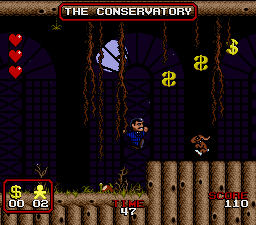 Unlike many platform games of the era that simply pushed players from left to right, The Addams Family allowed players to freely explore interconnected sections of the mansion. It almost felt like a spooky version of a Metroid-style adventure game. Doors led to hidden dimensions, dangerous caves, underground crypts, icy caverns, and bizarre dreamlike worlds filled with strange enemies.
For kids playing the game in the early 1990s, the mansion itself became unforgettable. Every hallway felt mysterious. Every wall seemed to hide a secret. Some rooms required incredibly precise jumps, while others concealed hidden extra lives or piles of money.
The non-linear design made the game feel much larger than most licensed platformers. Players could wander almost anywhere from the start, though many areas were far too dangerous for inexperienced players. This gave the game a sense of discovery that kept people coming back even after repeated defeats.
Gomez Addams Was a Surprisingly Great Hero
One of the most unusual things about the game was its choice of protagonist. Instead of using Wednesday or Uncle Fester as the playable character, the game centered entirely around Gomez Addams.
That might have sounded strange on paper, but Gomez turned out to be a fantastic platform hero. Wearing his classic pinstripe suit, Gomez leaped through haunted rooms, bounced on enemies, and survived ridiculous dangers with cartoonish determination.
His attacks were simple. Most enemies were defeated by jumping on them, much like Mario. Yet the game added enough personality through animation and atmosphere that Gomez never felt like a generic copycat hero.
Part of what made the game so memorable was how closely it embraced the weird humor of the Addams Family universe. Normal people would be terrified by haunted suits of armor or living skeletons. Gomez treated everything like another exciting day at home.
The game perfectly captured the Addams Family philosophy that the bizarre and horrifying were completely ordinary parts of life.
The Difficulty Was Absolutely Brutal
Like many games from the early 1990s, The Addams Family was incredibly hard. Modern gamers used to checkpoints and autosaves might be shocked by how unforgiving the game could become.
Bottomless pits were everywhere. Spikes covered entire floors. Enemies appeared in awkward locations designed specifically to ruin jumps. Some sections demanded near-perfect timing.
The game also featured one of the most infamous mechanics of the era: fall damage. If Gomez fell from too great a height, he would lose health instantly. That may sound minor today, but it made exploration far more stressful because every leap carried real danger.
Boss fights could also be surprisingly difficult. Giant monsters, ghosts, and bizarre creatures guarded captured members of the family. Defeating them required patience and careful movement rather than simple button mashing.
Despite the difficulty, players rarely gave up entirely. There was something addictive about slowly mastering the mansion room by room. Every successful rescue felt genuinely rewarding.
Many retro gamers today still remember finally saving a family member after hours of frustration as one of the great accomplishments of their childhood gaming years.
The Graphics Captured Gothic Horror Perfectly
Visually, The Addams Family stood out immediately from most colorful cartoon platformers of its era. While games like Mario embraced bright fantasy worlds, Addams Family leaned heavily into gothic horror aesthetics.
The mansion was filled with candles, cobwebs, skulls, graveyards, and creepy decorations. Storm clouds rolled in the background while dimly lit corridors created an atmosphere that genuinely felt spooky for younger players.
The SNES version especially impressed gamers with large sprites and detailed environments. Gomez himself moved smoothly across the screen, while enemies had surprisingly creative designs ranging from floating ghosts to bizarre monsters riding strange contraptions.
What really made the visuals memorable was the balance between creepy and humorous. Nothing in the game felt truly terrifying because the Addams Family universe always mixed horror with comedy. The game understood that perfectly.
Even today, the graphics still hold up remarkably well compared to many licensed games from the same era.
The Music Was Unforgettable
One of the strongest elements of the game was its soundtrack. Composer Jonathan Dunn delivered eerie, energetic music that perfectly matched the mansion’s creepy atmosphere.
The songs combined playful melodies with gothic undertones, creating tracks that sounded both fun and unsettling. Many retro gamers still consider the music among the best soundtracks ever produced for a licensed platform game.
Different sections of the mansion featured unique themes that helped each area feel distinct. Underground caves sounded mysterious and dangerous, while outdoor graveyard areas carried a more dramatic horror vibe.
The music gave the game personality. Without it, the mansion might have felt repetitive. Instead, each new area felt like entering another bizarre corner of the Addams universe.
Why the Game Still Matters Today
Modern gamers discovering The Addams Family for the first time are often surprised by how ambitious it was. What could have been a lazy movie tie-in instead became one of the stronger platform games of its generation.
Part of the game’s lasting appeal comes from how faithfully it respected the source material. The developers clearly understood what made the Addams Family special. They did not simply paste movie characters onto a generic game engine. They built an experience that genuinely felt like stepping into the family’s strange world.
The exploration mechanics also helped the game age better than many straightforward platformers. Searching for secrets, hidden rooms, and alternate paths still feels rewarding decades later.
Retro gaming collectors now frequently seek out the SNES and Genesis versions, and the game has gained a strong cult following online. Many players who grew up during the 1990s remember renting it from video stores only to become obsessed with conquering its enormous mansion.
The game also represents a fascinating era in gaming history when licensed games could unexpectedly become classics. During the 8-bit and 16-bit generations, developers often had to work with limited technology and tight deadlines. Occasionally, though, creativity overcame those limitations, and something special emerged.
That is exactly what happened with The Addams Family.
A Gothic Classic Worth Revisiting
The Addams Family may not receive the same recognition as the biggest platform games of the 1990s, but it deserves far more appreciation than it usually gets. Beneath its movie-license origins lies a deeply atmospheric, challenging, and genuinely entertaining adventure that captured the weird charm of the Addams Family perfectly.
From its enormous mansion and brutal difficulty to its fantastic soundtrack and gothic visuals, the game created an experience unlike almost anything else available during its era. It was spooky without being horrifying, funny without becoming silly, and difficult without feeling unfair most of the time.
For many gamers, it remains one of the defining hidden gems of the 16-bit generation. Whether you played it on the SNES, Genesis, or another platform, The Addams Family left an impression that never really disappeared.
More than thirty years later, Gomez Addams is still leaping through haunted hallways, rescuing his bizarre family, and reminding retro gamers why the strangest games are often the ones we remember forever.